Research
Phage-assisted evolution for cyclic peptide discovery
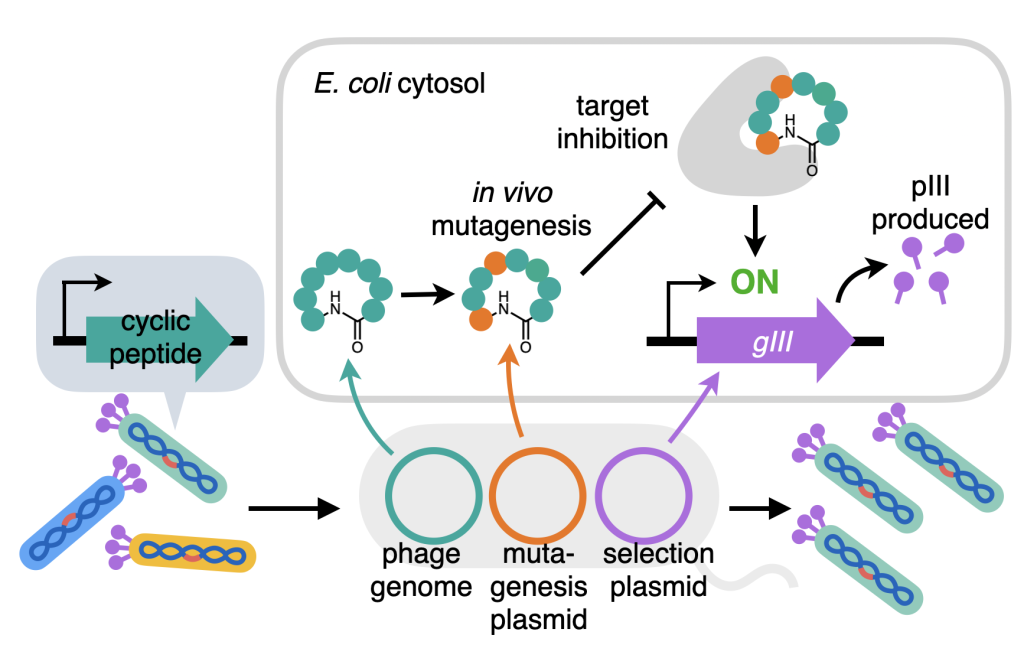
Cyclic peptides have attracted enormous interest as research tools and therapeutics because they can inhibit historically difficult to drug targets such as protein-protein interactions. We are using phage-assisted evolution to select genetically encoded cyclic peptide libraries for inhibitors of a variety of targets, including aggregation-prone proteins implicated in protein misfolding diseases.
Amyloid-β oligomers
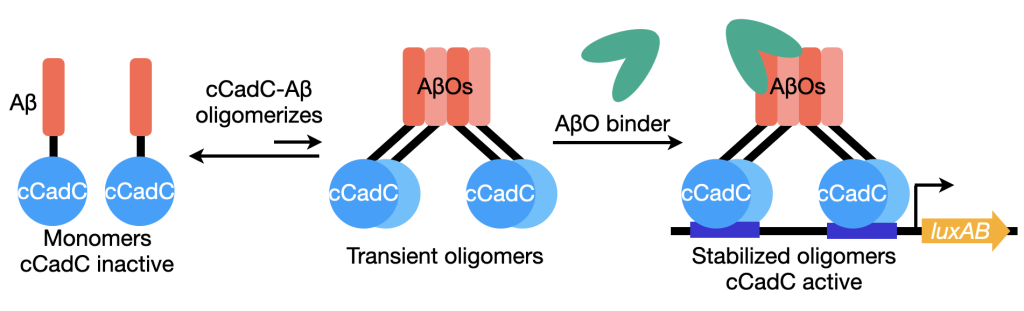
Toxic oligomers formed by amyloid-β (Aβ) self-association are of high interest for research into the causes and treatment of Alzheimer’s Disease. We are developing new models to study Aβ oligomer formation and to identify agents that can selectively bind oligomers over other Aβ conformers.
Rubisco biogenesis
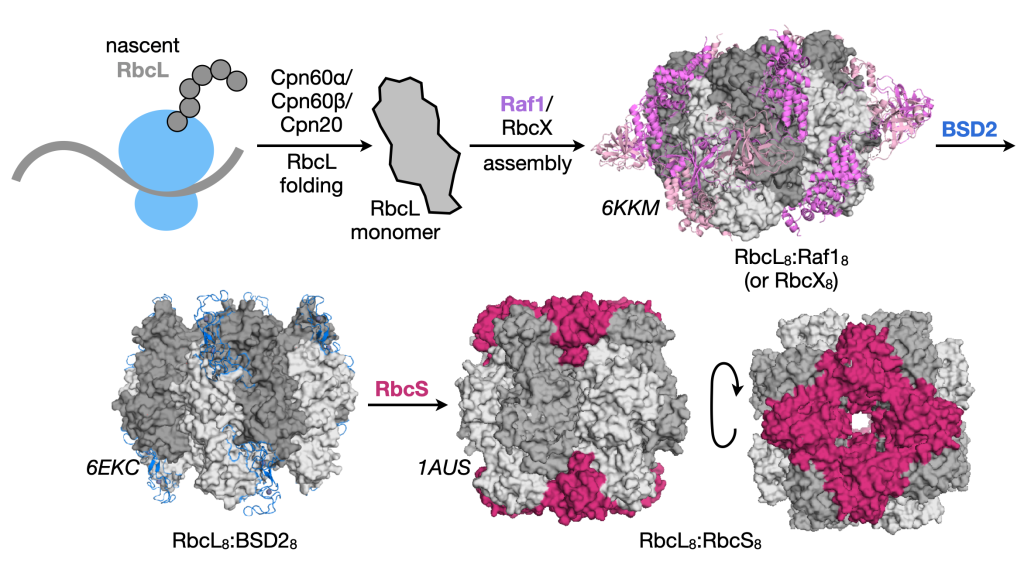
Ribulose-1,5-bisphosphate carboxylase oxygenase (Rubisco) is the enzyme that fixes CO2 into biomass in photosynthetic organisms. Some Rubiscos orthologs, such as the ones produced in plants, require up to seven different chaperones for their biogenesis. These chaperones can be quite selective and are hypothesized to have constrained Rubisco evolution. We are studying the ability of Rubisco chaperones to recognize non-native clients and how chaperone selectivity affects the changes that can be made to the Rubisco sequences.